
Memory Thematic ETF Launches: The Capital Siphoning Effect
2026-11-09

Memory chip indexes are often presented as straightforward baskets of semiconductor companies, yet the economic drivers behind memory businesses are considerably more complex. Average selling prices, or ASPs, and bit growth are two of the most important variables for understanding memory industry earnings, but they influence companies in different ways and operate on different timelines. When these factors are incorporated into an index methodology, they can also change how an AI storage and computing ETF or related index derivative responds to the memory cycle.
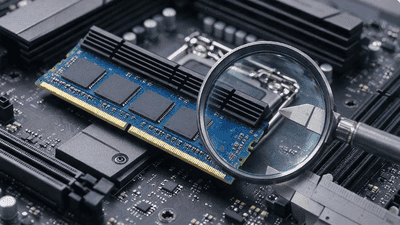
The distinction matters because memory demand is increasingly shaped by artificial intelligence. HBM is becoming an important component of high-performance accelerators, server DRAM requirements continue to rise with increasingly capable computing systems, and enterprise storage demand is expanding as AI workloads generate and retain larger datasets. At the same time, memory remains a capital-intensive and cyclical industry where capacity additions can eventually affect pricing.
A memory index methodology that combines ASP and bit growth therefore attempts to capture more than simple revenue growth. It seeks to understand whether industry expansion is being driven by higher prices, greater unit consumption, stronger demand, or some combination of these forces. For ETF investors and index-derivative users, that distinction can be useful because different combinations of ASP and bit growth can produce very different earnings and valuation environments.
ASP represents the average price at which a unit of memory is sold. In a cyclical semiconductor market, changes in ASP can have a substantial effect on revenue and profitability because memory products often have significant manufacturing costs but relatively scalable production economics once capacity is operating.
When ASPs rise while shipment volumes remain stable, memory manufacturers can experience meaningful revenue improvement. If utilization is high and production costs are relatively controlled, the impact on operating profit can be even greater. This operating leverage is one reason memory stocks can respond strongly to changes in pricing expectations.
For an index methodology, ASP can therefore serve as a measure of pricing power and cycle intensity. An index that gives greater weight to companies with strong exposure to improving memory prices may behave differently from an index designed primarily around market capitalization.
However, ASP alone does not explain the entire market. A higher price may reflect temporary supply shortages rather than durable demand growth. Similarly, falling prices do not necessarily indicate a deteriorating long-term industry because lower ASPs can accompany strong unit growth and increased adoption.

Bit growth measures the increase in the amount of memory capacity shipped, rather than simply counting physical units. This distinction is particularly important because memory products can become denser over time.
A smartphone, server, or storage system may contain significantly more bits of memory than an earlier generation without a proportional increase in the number of physical components. For the memory industry, bit growth therefore provides a more useful measure of underlying capacity demand than unit shipments alone.
In a growing AI infrastructure market, bit growth can accelerate as systems require larger memory pools, higher bandwidth, and greater storage capacity. AI servers may require substantial amounts of HBM and conventional DRAM, while enterprise AI deployments can increase demand for high-capacity storage.
From an index perspective, bit growth can represent the volume side of the memory equation. It helps distinguish an industry that is growing because customers are buying more memory from one that is growing mainly because prices are temporarily higher.
A simplified way to think about memory revenue is to combine price and volume. If bit shipments increase while ASP remains stable, revenue can grow through volume. If ASP increases while bit shipments remain stable, revenue can grow through pricing. When both increase simultaneously, the industry can experience particularly strong revenue expansion.
The reverse is equally important. A memory industry experiencing weak bit growth and falling ASPs can face substantial pressure. Companies may need to reduce utilization, delay capital expenditure, or adjust inventory levels to protect margins.
This relationship is highly relevant to AI storage and computing indexes because the two factors can behave differently during different phases of the cycle. AI adoption may support strong bit growth even when pricing becomes more competitive. Conversely, supply discipline can produce strong ASP growth before end-market demand becomes exceptionally strong.
A sophisticated index methodology therefore benefits from considering both dimensions rather than treating revenue growth as a single variable.

AI computing adds an unusual structural component to the memory cycle. Traditional memory demand has historically been influenced heavily by PCs, smartphones, servers, and consumer electronics. AI introduces workloads where memory bandwidth and capacity can become critical constraints on computing performance.
HBM is the clearest example. Its role in high-performance accelerator systems means that demand can be linked to the deployment of advanced computing architectures. The relevant question is not merely how many chips are shipped, but how much memory bandwidth and capacity each system requires.
This can increase bit growth even when the number of AI systems grows at a more moderate pace. Each new generation of computing architecture may require more memory per system, creating a form of content growth that is difficult to capture through conventional semiconductor unit metrics.
For index designers, this means that bit growth can become a strategic indicator rather than simply a cyclical volume measure.
HBM also introduces an important ASP distinction. High-bandwidth memory can command different pricing characteristics from conventional commodity DRAM because of its performance requirements, packaging complexity, qualification processes, and integration with advanced computing systems.
A memory index that treats every bit as economically identical may therefore miss an important part of the industry's transformation. The same amount of memory capacity can have very different economic value depending on its technology, bandwidth, packaging requirements, and application.
This creates a challenge for index methodology. Bit growth remains valuable because it measures capacity demand, but ASP needs to be interpreted alongside product mix. Rising blended ASPs may reflect stronger demand for higher-value memory products rather than simply broad pricing inflation across the entire memory market.
For investors, the distinction is significant. A memory company can experience improving revenue because of a favorable product mix even if conventional memory pricing remains relatively stable.

Blended ASP can change because the industry sells a different combination of products. Suppose demand for conventional DRAM remains steady while HBM represents a larger share of total revenue. The average price across the portfolio may rise even without a uniform increase in the price of every memory product.
This is why index methodologies based purely on headline ASP changes can sometimes produce misleading conclusions. Analysts need to separate price changes from mix changes.
AI infrastructure makes this increasingly important because high-performance memory products can grow faster than traditional categories. An ETF that contains companies with strong exposure to advanced memory may therefore respond differently from an index based on total memory bit shipments.
The most useful approach is to examine ASP at several levels: industry-wide pricing, product-specific pricing, and company-level blended pricing. Each tells a different part of the story.
Bit growth also has a supply-side dimension. Memory manufacturers can increase output by expanding wafer capacity, improving yields, increasing die density, or transitioning to newer process technologies.
This means bit growth does not always represent stronger end demand. Industry supply can also increase substantially, potentially creating excess inventory if customer demand does not keep pace.
For example, a period of aggressive capacity expansion may initially support strong bit shipment growth. If supply growth eventually exceeds demand, ASPs can fall even while total bits shipped continue increasing. The memory industry can therefore experience rising volume alongside deteriorating profitability.
For index construction, this is one of the most important reasons to combine ASP and bit growth. Bit growth measures how much memory is moving through the market, while ASP helps reveal whether that volume is occurring under favorable or unfavorable pricing conditions.
There are several ways an index methodology could incorporate these factors. A simple market-capitalization index may not explicitly use ASP or bit growth at all. Instead, companies with larger market values receive larger weights.
A factor-based methodology could take a different approach. Companies with stronger exposure to favorable ASP trends might receive additional weight, while companies benefiting from sustained bit growth could also receive greater representation.
Another approach would be to construct a composite factor that considers both pricing momentum and volume growth. Such a methodology could attempt to identify companies positioned in the strongest part of the memory cycle.
Each approach has advantages and limitations. A pricing-focused index may become highly sensitive to short-term memory cycles. A bit-growth-focused index may capture structural AI demand but underestimate pricing deterioration. A blended model can reduce dependence on one variable but may become more complicated and less transparent.
For an AI storage and computing ETF, the interaction between ASP and bit growth can influence both earnings expectations and valuation. When both factors are improving, investors may perceive a favorable combination of demand expansion and pricing strength.
When bit growth is strong but ASPs decline, the market may begin asking whether volume growth is sufficient to offset price compression. This can occur when manufacturers add capacity aggressively or when customers negotiate lower prices.
When ASPs rise but bit growth remains weak, investors may interpret the improvement as supply-driven rather than demand-driven. Such a cycle can be profitable for manufacturers in the short term but may not necessarily indicate a durable expansion in the addressable market.
These distinctions can influence ETF volatility because investors are not simply forecasting revenue. They are trying to determine which combination of price and volume will persist.
Index derivatives add another dimension because they allow investors to express views on future changes in the memory cycle. If market participants expect ASP recovery, options on memory-related ETFs or indexes may reflect stronger demand for directional exposure.
Similarly, if bit growth expectations are rising because of AI server deployment, investors may become more interested in longer-duration exposure to memory infrastructure.
Derivative pricing can also reflect uncertainty about the relationship between the two factors. A market may have confidence that bit growth will remain strong but be uncertain about whether capacity expansion will suppress ASPs. That uncertainty can increase volatility even when the long-term AI demand narrative remains intact.
For this reason, ETF and index derivatives can be viewed as a market-based expression of the expected interaction between volume and pricing rather than a simple bet on semiconductor demand.
One of the clearest ways to interpret ASP and bit growth is through their four basic combinations. Rising ASP and rising bit growth generally represent the strongest combination because both price and volume support revenue.
Rising ASP with weak bit growth suggests a supply-constrained market where pricing may be doing most of the work. This environment can support profitability but may also attract future capacity investment.
Falling ASP with rising bit growth creates a more complicated picture. End-market adoption may be healthy, but pricing pressure can reduce the economic benefit of volume growth. This configuration is particularly relevant when memory manufacturers increase production aggressively.
Finally, falling ASP and weak bit growth represent a more challenging environment. Revenue pressure can emerge from both lower prices and reduced demand, potentially encouraging production cuts and capital expenditure discipline.
These configurations can shift rapidly. AI demand can improve bit growth, while supply additions can simultaneously weaken ASP. The result is an industry where two positive or negative forces may be operating at the same time.
ASP and bit growth should also be measured over different time horizons. Short-term ASP movements can respond quickly to inventory changes, while bit growth may reflect longer-term changes in system architecture and memory content.
A sudden price increase may therefore provide an earlier signal of tightening supply, while sustained bit growth can offer stronger evidence of structural demand.
For ETF investors, combining these horizons can be more useful than focusing on one quarterly change. A short-term ASP surge accompanied by weak long-term bit growth may have a different interpretation from a steady increase in memory content combined with gradually improving pricing.
This is especially important for AI infrastructure because the industry is undergoing architectural change. Long-term increases in memory requirements can coexist with short-term inventory corrections.
A robust memory index methodology can treat ASP and bit growth as central variables while incorporating additional information. Inventory, utilization, capital expenditure, product mix, technology transitions, and customer concentration can all influence how price and volume translate into earnings.
HBM deserves separate consideration because its economic characteristics differ from those of conventional memory. Enterprise storage should also be monitored separately from consumer NAND because AI data workloads can produce different demand patterns.
At the market level, ETF flows and derivative activity can provide information about investor positioning. A strong fundamental setup may have limited immediate price impact if institutional positioning is already crowded. Conversely, improving fundamentals combined with under-positioning can create a more pronounced market response.
ASP and bit growth are two of the most useful building blocks for understanding the economics of memory chips and the behavior of memory-focused indexes. ASP reveals the pricing environment, while bit growth captures the volume and capacity dimension of memory demand. Neither factor is sufficient on its own.
The AI computing cycle makes this distinction even more important. HBM can increase the amount and value of memory required per accelerator, while server DRAM and enterprise storage can expand alongside broader data-center investment. At the same time, capacity additions can introduce pricing pressure even when underlying demand remains strong.
For AI storage and computing ETFs, the interaction between these variables can influence both constituent earnings and portfolio behavior. Index derivatives add another layer by allowing investors to price future changes in the relationship between memory demand, pricing, and volatility.
The most informative memory index methodology is therefore not simply one that identifies companies associated with memory. It is one that recognizes the forces driving their economics. When ASP and bit growth are analyzed together with product mix, capacity, inventory, and AI infrastructure demand, investors gain a clearer framework for understanding where the memory cycle may be coming from and how an index or ETF could respond to its next phase.